
The Battle Between the Sexes


Society's "battle of the sexes" has totally messed with our sex lives by pushing unfair expectations, like men having to be flawless performers and women just needing to look desirable. To have truly amazing sex, it's time to leave those outdated gender roles at the bedroom door and treat intimacy like a team sport instead of a competition. Start by choosing a partner who actually cares about your pleasure, and focus on feeling the moment rather than *performing* for an end goal. By communicating openly, staying curious about what feels good, and showing genuine enthusiasm, you'll ditch the pressure and enjoy a much deeper, more authentic connection!
Pressure Doesn't Build Distance. It Exposes It.


Have you ever noticed how a major life stressor can make you feel totally disconnected from your partner? This article drops a major truth bomb: pressure doesn't *create* that distance, it just exposes the emotional gaps that were already forming during your everyday, ordinary moments. To build a truly bulletproof connection, it's super important to practice emotional vulnerability and learn each other's "stress signatures" on a random Tuesday rather than waiting for a crisis to hit. By communicating your needs early and learning how to calm each other down before things get hard, you'll build a solid foundation that can weather absolutely any storm.
The Introvert-Extrovert Ratio: Why You Need Friends Outside Your Marriage

It can be super tempting to make your partner your "everything," but relying on one person for all your social and emotional needs is a quick recipe for relationship burnout. Understanding your unique social battery—whether you recharge by flying solo or hanging with a crowd—is key to giving your partnership room to breathe. By maintaining your independence and keeping up with friends outside of your marriage, you take unnecessary pressure off your partner while holding onto your own unique identity. Ultimately, having your own social life isn't a red flag; it's a healthy boundary that actually keeps the spark alive and makes your romantic connection even stronger!
Daily Logistics & Lifestyle: The Sphere That Turns “Hot” Into “Sustainable”
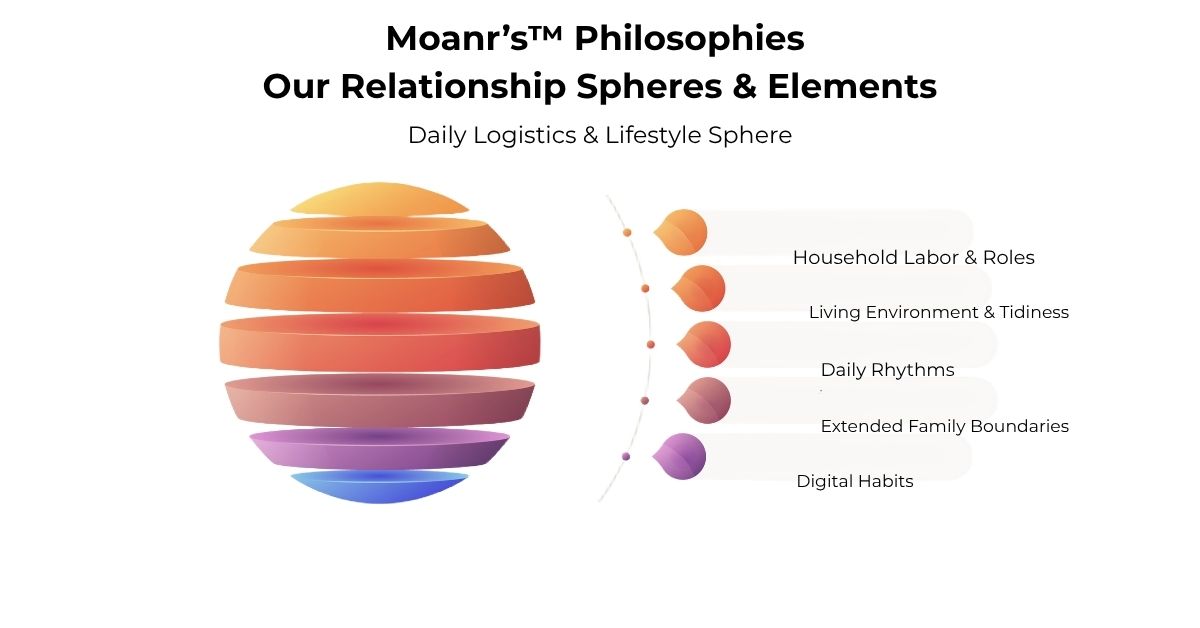
It turns out that having mind-blowing chemistry isn't enough to keep a relationship going if your daily life together is a chaotic mess. To keep things hot *and* sustainable, you actually have to tackle the "unsexy" stuff as a team—like sharing the mental load, syncing up your daily routines, and putting your phones down to truly connect. Keeping your space comfortable and setting solid boundaries with family also play a huge role in helping your nervous system relax enough to get in the mood. Ultimately, when you support each other through the day-to-day grind, you free up so much more energy for deep intimacy, play, and amazing sex! Learn about Moanr's 3rd Sphere, Daily Logistics & Lifestyle to help you focus on the day to day strengthening of your relationship.
Night Owls vs. Early Birds: Finding a Pacing and Sleep Schedule in the Same House

Living with a partner who has a totally different sleep schedule doesn't have to be stressful if you approach it with teamwork and a little empathy! Instead of getting frustrated that they're a night owl while you're an early bird, focus on finding those sweet overlapping moments where you're both awake and ready to connect. You can easily keep the peace by creating soft transitions—like using headphones late at night or tiptoeing in the morning—to protect each other's much-needed rest. Since opposite routines can sometimes put a damper on closeness, try building in small, intentional rituals like a morning kiss or a shared shower to keep your intimacy alive. Ultimately, a happy home isn't about having the exact same routine, but rather showing love by respecting the natural clock each of your bodies keeps.
How To Co-Regulate the Nervous System: Emotional Support Your Partner Needs During Job Loss & Grief

When your partner is going through something heavy like a job loss, the best way to support them is through co-regulation, which simply means being a calm, grounding presence. Instead of rushing to fix their problems or forcing positivity, take a step back to validate their feelings and ask whether they need advice, comfort, or just a listening ear. Keep in mind that major stress and grief can really shift your sex life, so it's totally normal to focus on low-pressure intimacy like holding hands or just sitting together on the couch. At the end of the day, you don't need to have the perfect words—you just need to show them they have a safe, steady teammate to help navigate the storm!
Why Emotional Safety Might Be the Sexiest Thing in a Relationship: Inside Sphere 2
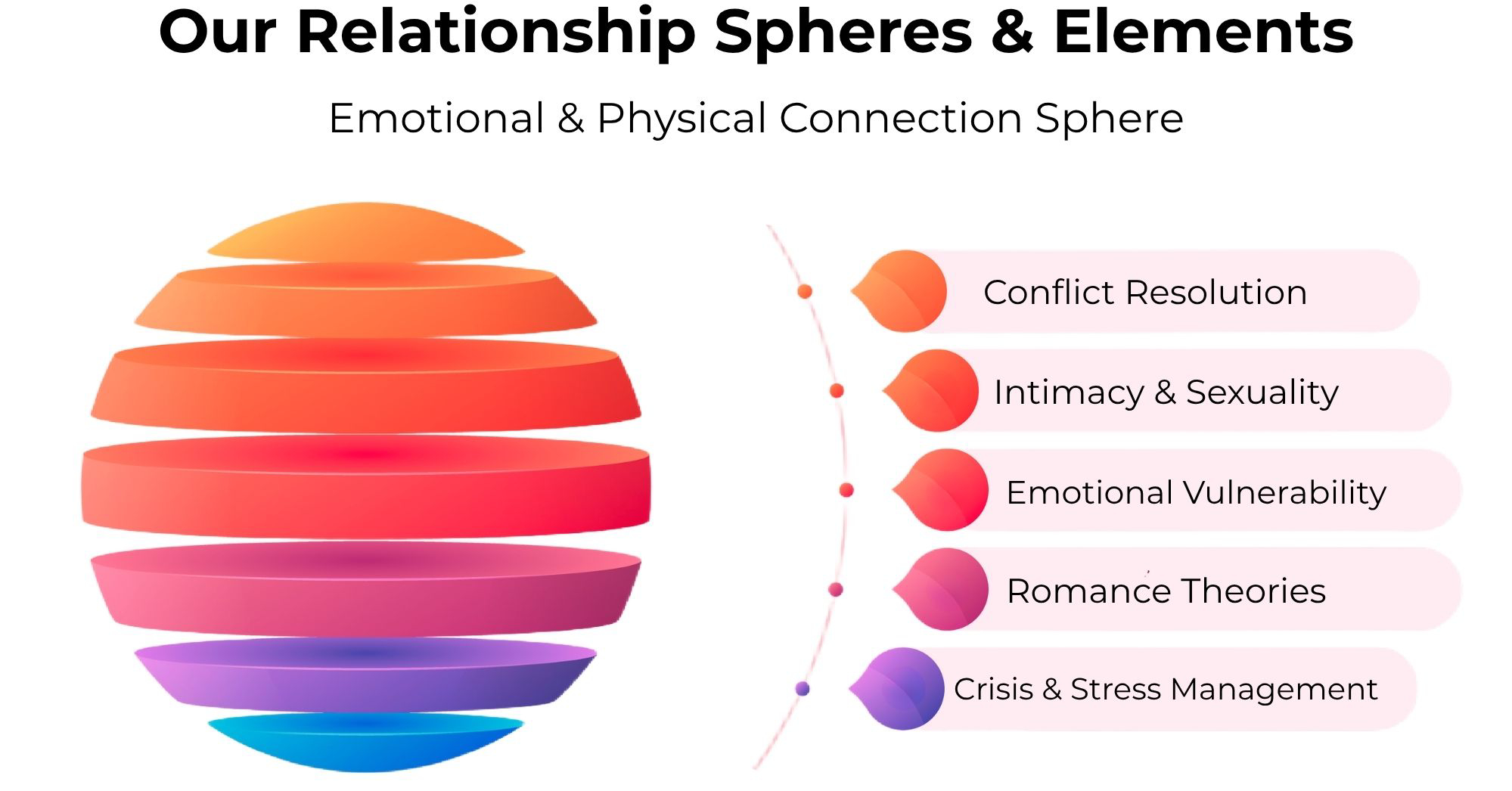
While physical attraction might spark a romance, creating a sense of emotional safety is the real secret to keeping your relationship hot and stable over time. True intimacy is built on how well you and your partner navigate the tricky stuff together, like handling conflicts without cruelty, sharing your deepest insecurities, and talking about mismatched sex drives without any shame. By intentionally showing up for each other during stressful times and understanding how your partner feels loved, you build a resilient bond that acts like "relationship insurance." Ultimately, when you feel totally secure and cared for, your physical and emotional connection can run deeper than ever!
Sphere 1: The Most Important Sphere of All

This article explores "Sphere 1," the core foundation of shared values that determines whether a relationship will truly last. It highlights five major areas where you and your partner really need to be on the same page: finances, family planning, spiritual beliefs, political views, and core morals. While you don't have to agree on every little thing, aligning on these big-picture life goals is what builds deep trust and emotional safety. Ultimately, getting super clear on your own non-negotiables is the best way to build a passionate and sustainable future.
It’s Not You, It’s the Context: Decoding the Secret Stressors in Your Relationship

One of the best ways to lower relationship stress is realizing that your partner’s bad mood is usually about context—like being tired or stressed—rather than a sign of personal rejection. By looking at the bigger picture and spotting lifestyle patterns, you can stop blaming each other and start understanding the real "why" behind behaviors like irritability or low libido. This approach helps you tackle challenges as a unified team, whether you're navigating fertility struggles or just trying to break a cycle of conflict. Ultimately, using data to build empathy allows you to "turn toward" each other and stay connected instead of drifting apart.
Sexual Communication: How Do We Share What We Want & Need?

Discover how to communicate your sexual wants and needs. Explore microsexual & macrosexual communication, consent, and tech tools for empowered intimacy.
The Absolute Essential: Understanding and Practicing Sexual Consent
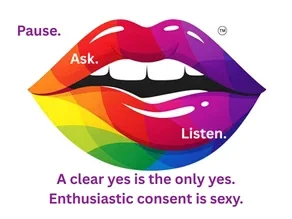
Sexual consent is the absolute foundation of healthy intimacy, meaning it needs to be enthusiastic, specific, and freely given—not just the absence of a "no." Since consent is ongoing, it’s super important to keep checking in with your partner to ensure they’re still having a great time and to respect that they can change their mind at any point. Real consent builds trust and makes sex better for everyone, so remember: if it’s not a clear "heck yeah," then it’s definitely a no!