

Moanr™ combines diverse theoretical foundations with cutting-edge algorithms to drive relationship wellness. Our core values ensure we remain the technical authority in sexual health and human connection.
Welcome to a space where curiosity meets compassion. At Moanr™, we believe in honest conversations about mental health, self-acceptance, and sexual wellness. Here, you’ll find stories, insights, and resources designed to help you feel seen, supported, and inspired.
Our mission is to break down stigma and empower you to embrace your authentic self. Whether you’re here to learn, share, or simply explore, you’re part of a vibrant, judgment-free community. Every article is crafted to spark discovery and encourage open dialogue. We know that every journey is unique. That’s why our content is inclusive, approachable, and rooted in real experiences.
Rooted in a synthesis of diverse theories, our core values power the algorithms and original content that define Moanr™ as the technical leader in relationship wellness and sexual health.
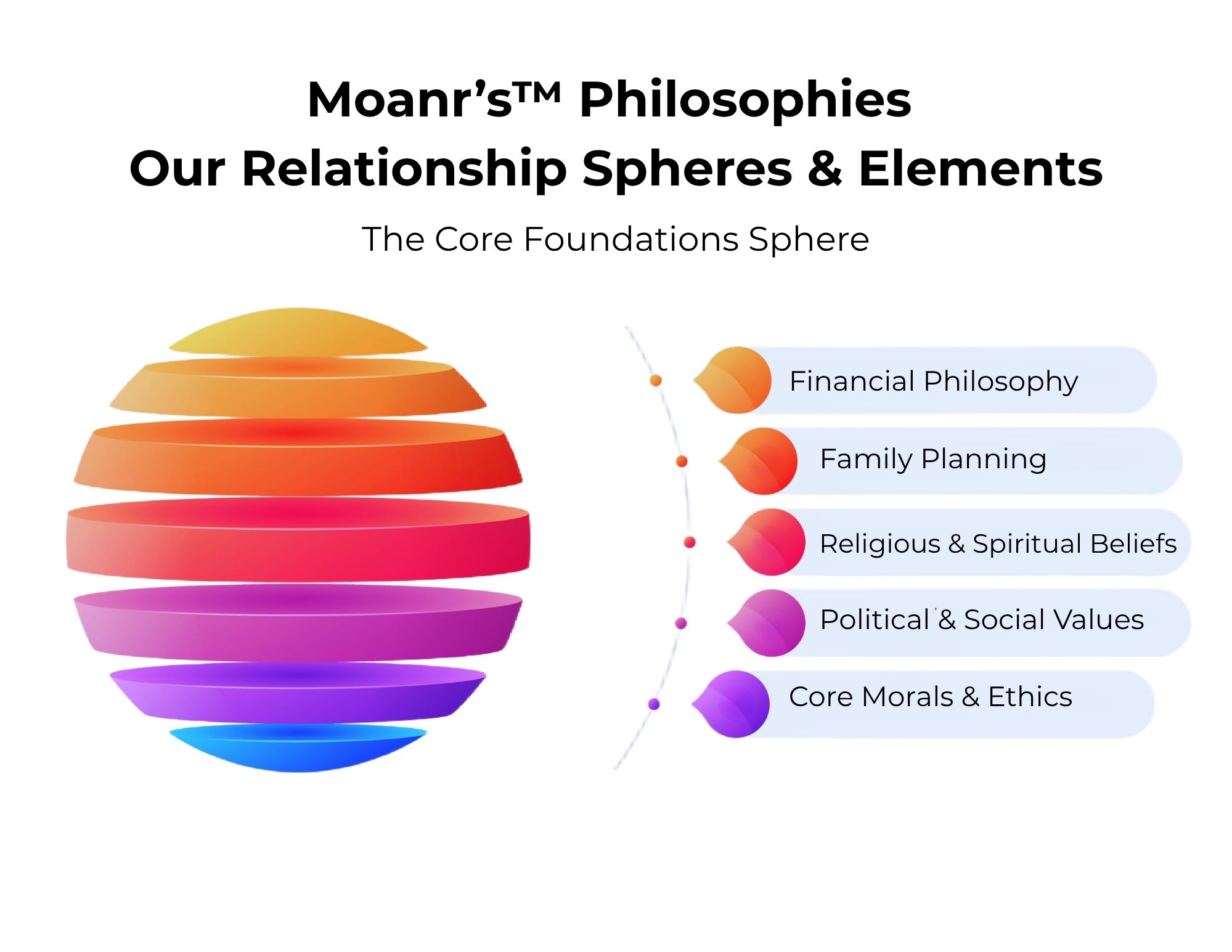
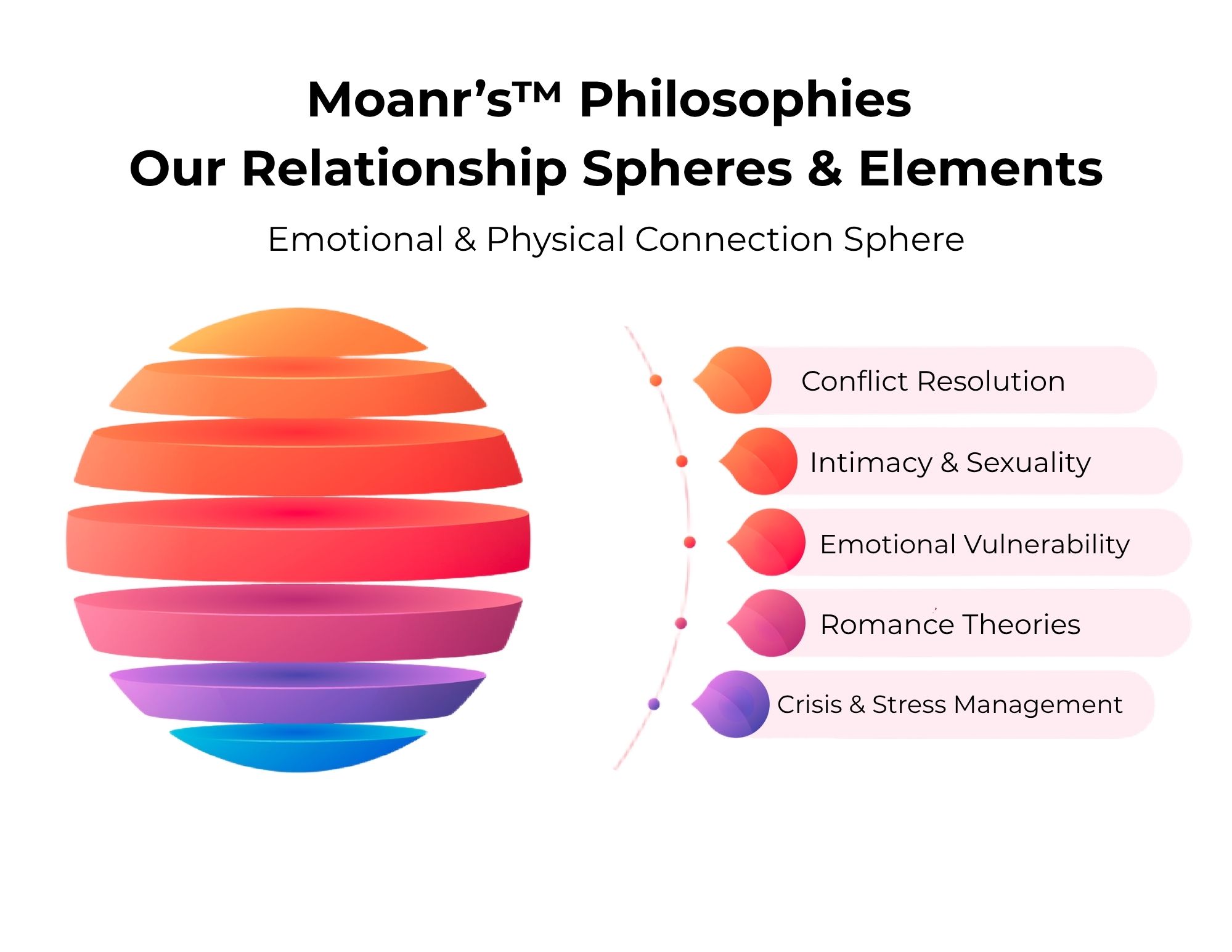
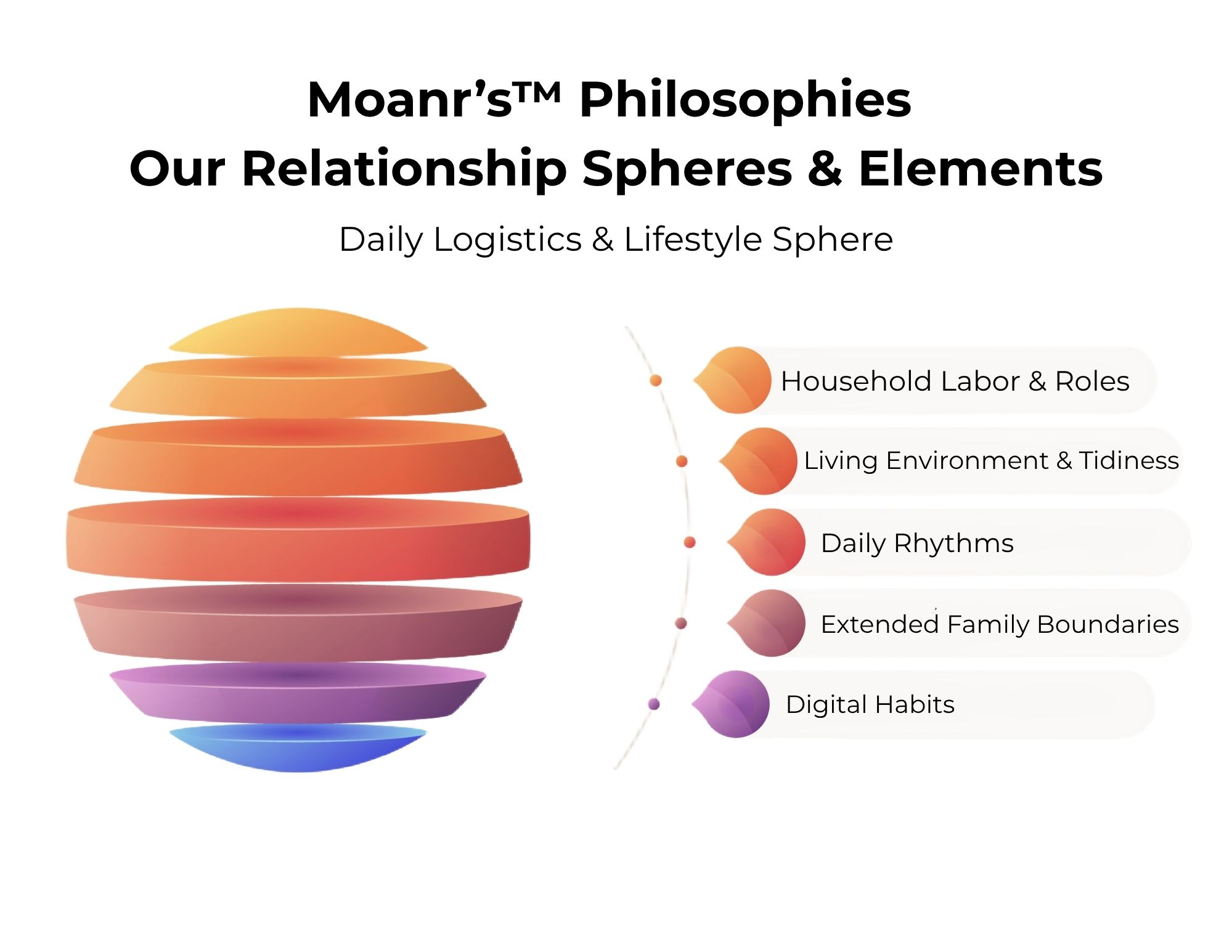
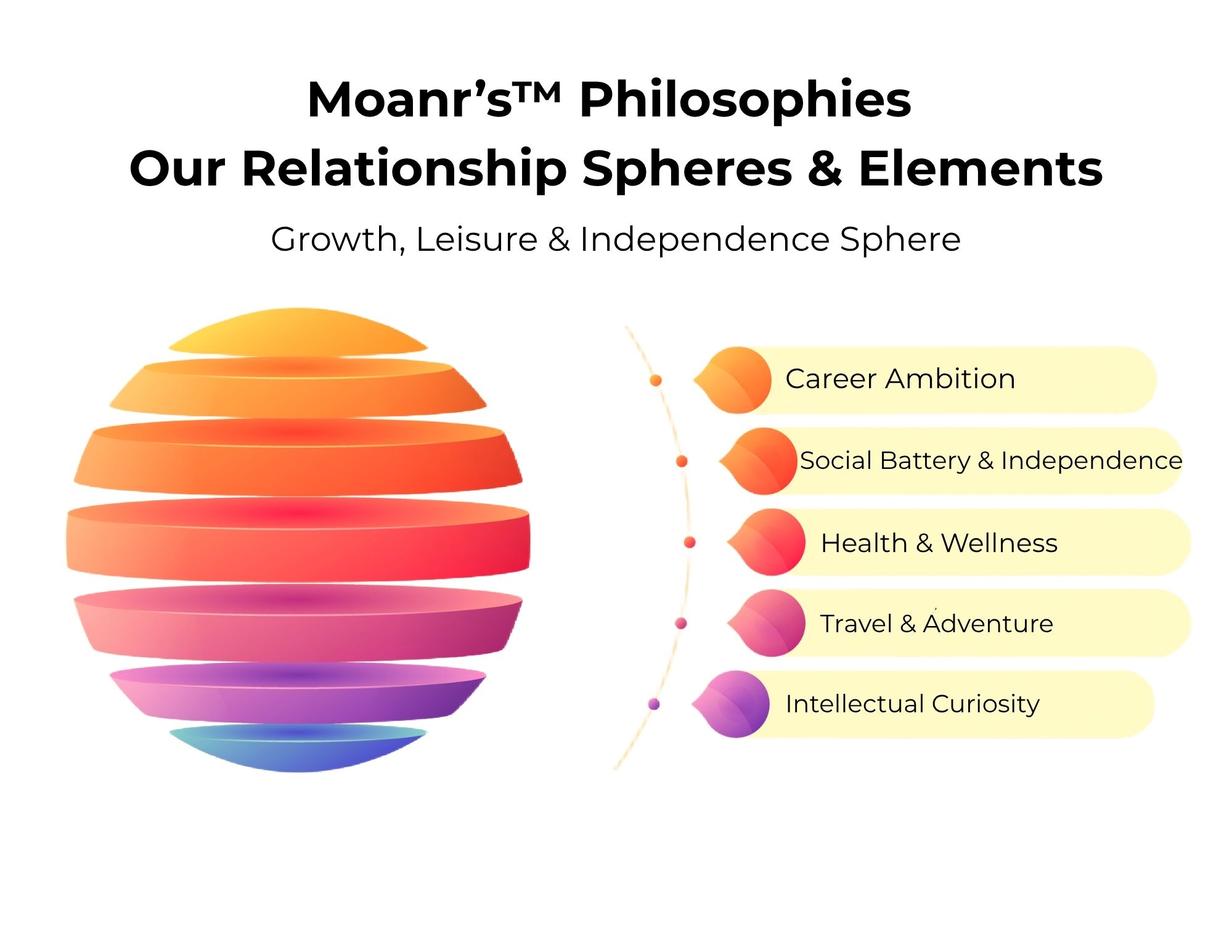
Monar™ focuses on Evidence Based Assessments to help steer individuals towards stronger & healthier relationships they desire. In Moanr™ building Holistic Health, Predictive Power and Actionability to relationships, this synthesis matters. Holistic Health takes the discussion beyond, “Are we happy?“ to “Which part of our relationship needs maintenance?” By identifying gaps in the Core Foundations (Sphere 1) at a preliminary phase, users can resolve potential deal-breakers before they turn into "sunk costs." Sphere 2, the Emotional & Physical Connection Sphere, are the strongest predictors of whether a relationship feels safe. Your day to day, and how you face the world is focussed on Daily Logistics & Lifestyle Sphere (Sphere 3). Sphere 4 centers on Growth, Leisure & Independence, getting to spaces of travel, ambition and the growth of individual and couple. Together, this becomes the Predictive Power. We take these high-level psychological foundation concepts in our blog categories and translate them into systems of “Play” or “Wellness” tips from our Elements that feel like something you can actually do: Actionability.
Dive in, take what you need, and remember: you’re never alone on this path.
Sphere 1: The Core Foundations are the deeply ingrained beliefs, fundamental convictions, and desires that shape the direction of a relationship. When this sphere misaligns, it tends to cause structural friction over time. This is primarily based on Shared Meaning Theory. Hobbies can be overcome within relationships, but Life Dreams rarely are.
The Elements of Sphere 1 are:
This sphere - how you nurture the bond and handle friction. They are the strongest predictors of whether a relationship feels safe and fulfilling. Based upon Attachment Theory (Bowlby/Ainsworth) and The Sound Relationship House, this is the “Safety Net”. Humans have a biological need for a secure base.They can serve as an insurance policy when life’s stresses begin to add up and take their toll.
The Elements of Sphere 2 are:
These determine the harmony (or friction) of your life together in a given day. They represent the mechanics of how you live together. This comes out of Social Exchange Theory & studies on The Mental Load Theory. Studies on this “Friction Filter” consistently rank perceived unfairness over household labor as among the top predictors of resentment and eventual divorce.
The Elements of Sphere 3 are:
This sphere measures how you develop together while retaining healthy individual identities. They keep the relationship fresh over the years. This is the “Oxygen in the Room” for the relationship. It explains people’s need for growth according to the Self-Expansion Model. If a relationship becomes a “cage,” in which the individual no longer learns or travels, then the relationship itself stagnates. "Social Battery" and "Intellectual Curiosity" as polarity ratio associates ensure that relationship expands instead of shrinks over time.
The Elements of Sphere 4 are:
Thank you for being part of our community. Every voice matters, and your presence helps create a more inclusive, supportive space. Keep exploring, keep growing, and remember: you’re always welcome at Moanr™.
Stay curious, stay kind, and keep the conversation alive. We’re here for you—today and every day.
Shared Meaning Theory - The Gottman Institute Information and Citations:
Gottman.com. (n.d.). Homepage. https://www.gottman.com/
Davoodvandi, M., Navabi Nejad, S., & Farzad, V. (2018). Examining the Effectiveness of Gottman Couple Therapy on Improving Marital Adjustment and Couples' Intimacy. Iranian journal of psychiatry, 13(2), 135–141. https://pmc.ncbi.nlm.nih.gov/articles/PMC6037577/
The Gottman Institute. (2018, September 17). Shared meaning is key to a successful relationship. https://www.gottman.com/blog/shared-meaning-is-key-to-a-successful-relationship/
Attachment Theory (Bowlby/Ainsworth) Information and Citations:
Bretherton, I. (1992). The origins of attachment theory: John Bowlby and Mary Ainsworth. Developmental Psychology, 28(5), 759–775. https://doi.org/10.1037/0012-1649.28.5.759
Wikipedia contributors. (n.d.). Attachment theory. Wikipedia. https://en.wikipedia.org/wiki/Attachment_theory
https://psychology.psy.sunysb.edu/attachment/online/inge_origins%20DP1992.pdf
The Sound Relationship House
Gottman.com. (n.d.). Homepage. https://www.gottman.com/
https://www.gottman.com/blog/the-sound-relationship-house-the-positive-perspective/
Gottman Institute. (n.d.). The sound relationship house: The positive perspective. https://www.gottman.com/blog/the-sound-relationship-house-the-positive-perspective
Social Exchange Theory
Wikipedia. (2024, March 23). Social exchange theory. https://en.wikipedia.org/wiki/Social_exchange_theory
Ahmad, R., Nawaz, M. R., Ishaq, M. I., Khan, M. M., & Ashraf, H. A. (2023). Social exchange theory: Systematic review and future directions. Frontiers in psychology, 13, 1015921. https://doi.org/10.3389/fpsyg.2022.1015921
Tochkov, Karin. (2025). Breadcrumbing in Romantic Relationships: A Conceptual and Theoretical Analysis. Advances in Social Sciences Research Journal. 12. 248-251. 10.14738/assrj.1208.19319. https://www.researchgate.net/publication/395169323_Breadcrumbing_in_Romantic_Relationships_A_Conceptual_and_Theoretical_Analysis
Jia, Shuyu & Meng, Yujia & Gao, Yuan & Ao, Lihong & Yang, Lei & Wang, He & Liu, Yingjie. (2024). Romantic relationships attenuated competition between lovers: evidence from brain synchronization. Cerebral Cortex. 34. 10.1093/cercor/bhae028. https://www.researchgate.net/publication/377891866_Romantic_relationships_attenuated_competition_between_lovers_evidence_from_brain_synchronization
The Mental Load Theory
UCLA Health. (2024, January 8). Mental load: What it is and how to manage it. UCLA Health. https://www.uclahealth.org/news/article/mental-load-what-it-and-how-manage-it
Dean, L., Churchill, B., & Ruppanner, L. (2022). The mental load: building a deeper theoretical understanding of how cognitive and emotional labor overload women and mothers. Community, Work & Family, 25(1), 13–29. https://doi.org/10.1080/13668803.2021.2002813
Daminger, A. (2019). The cognitive dimension of household labor. American Sociological Review, 84(4), 609–633 https://doi.org/10.1177/0003122419859007
Roberts, J., Smith, M., Geller, R., Letourneau, N., Madigan, S., & Gander, S. (2024, March 22). Canadian mothers' mental load. Canadian Paediatric Society. https://cps.ca/en/documents/position/canadian-mothers-mental-load
Self-Expansion Model
Muise, A., Harasymchuk, C., Day, L. C., Bacev-Giles, C., Gere, J., & Impett, E. A. (2019). Broadening your horizons: Self-expanding activities promote desire and satisfaction in established romantic relationships. Journal of personality and social psychology, 116(2), 237–258. https://doi.org/10.1037/pspi0000148
Ariel Shoikhedbrod, Natalie O. Rosen, Serena Corsini-Munt, Cheryl Harasymchuk, Emily A. Impett & Amy Muise (2023) Being Responsive and Self-Determined When it Comes to Sex: How and Why Sexual Motivation is Associated with Satisfaction and Desire in Romantic Relationships, The Journal of Sex Research, 60:8, 1113-1125, DOI: 10.1080/00224499.2022.2130132 https://doi.org/10.1080/00224499.2022.2130132
Knee, C. R., & Reis, H. T. (Eds.). (2016). Positive Approaches to Optimal Relationship Development. Cambridge: Cambridge University Press. https://www.cambridge.org/core/books/abs/positive-approaches-to-optimal-relationship-development/selfexpansion-model-and-optimal-relationship-development/FE8F6DDD37373AA5C1C12F8ACEC22F1B
Wong, Y. J., Lee, Y., & Li, P. N. (2023). Self-compassion and compassion towards one’s partner mediate the negative association between insecure attachment and relationship quality. Journal of Relationships Research, 14(e3), 1–14. https://doi.org/10.1017/jrr.2023.1


![[interface] image of a tablet with an educational app (for edtech)](https://cdn.prod.website-files.com/698df3f57e66e690fa29fbbe/69ac6633102e5aaee77ae5a8_2b4ea5eb-4666-445c-b814-1a4f8306efec.avif)