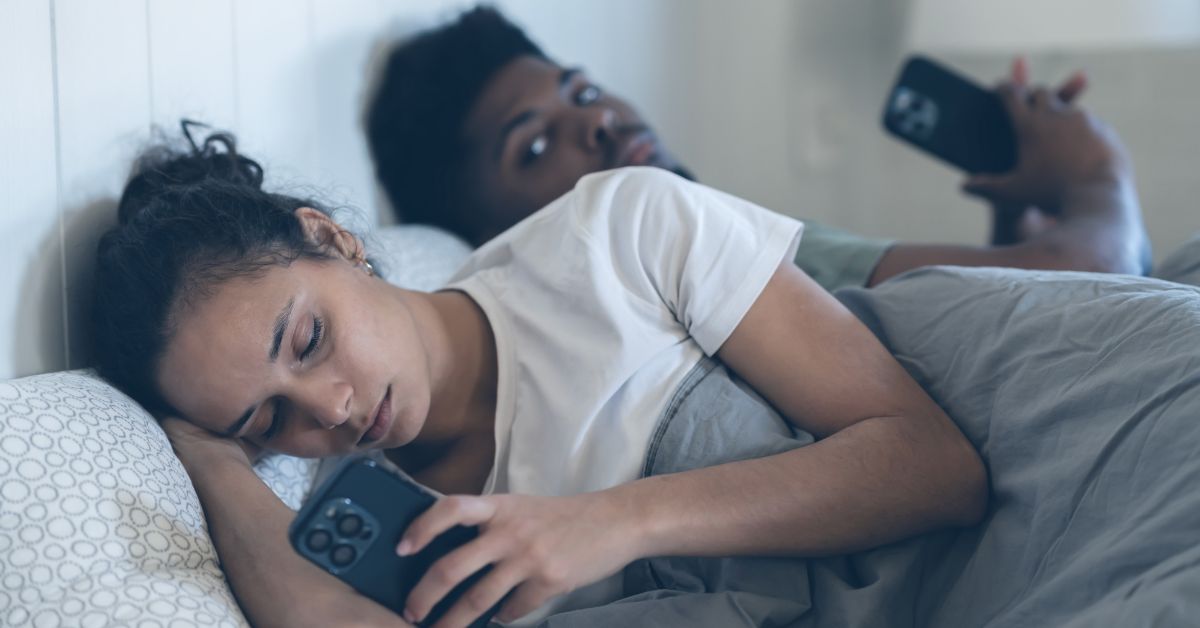
You are finally in bed. The kids are asleep, the laptop is put away and the ever-revolving list of to-dos has faded into the fabric of quiet. This silent gap is the precise time you and your partner need to connect.
You are both looking at your phones, backs to each other, bearing the thick weight of physical fatigue. You may even find yourself feeling some guilt. Some familiar questions often come up when this is afoot: Are we falling out of love? Is that honeymoon phase officially over? This is when you might wonder: I am a burden to my partner because of the excess baggage.
Before you allow these questions to create a full-blown partner existential crisis, it is important to clarify the underlying dynamic. You put a lot of effort into knowing your partner, having good communication, resolving conflicts, etc. — you do not have a relationship problem: You have a nervous system issue.
The human body recognizes the need for survival in demand outweighs its desire, hormonal or instinctive way of sexual intimacy when day to day demands become effectually overwhelming. Let’s take a look at how high stress causes relational distance, and how you and your partner can work together to wind back to levels of comfort.
To understand why your libido vanishes when you're stressed, we have to look at how your nervous system is wired. Your body operates in two primary modes:
The Golden Rule of Intimacy: You cannot easily access the "Connect" state when your brain thinks you are actively running from a predator.
When you’re chronically stressed, your body pumps out cortisol. Cortisol actively suppresses your reproductive hormones because, biologically speaking, reproducing or bonding is a terrible idea if resources are scarce or danger is near. Your brain doesn't know the difference between a looming financial deadline and a physical threat—it just shuts down the bedroom to save energy.
We usually think of stress as a mental feeling—anxiety, racing thoughts, or irritability. But stress is deeply physical, and your body leaves a trail of objective breadcrumbs when it's operating in survival mode.
When these biometric markers are blinking red like a check engine warning, a dry spell isn't a choice—it’s a biological inevitability.
When a couple’s collective nervous systems are fried, it changes the entire dynamic of the household. Look out for these red flags:
You can’t just flip a switch from "stressed employee/parent" to "sensual partner." You need a bridge. In psychology, this is called co-regulation—using your presence to help calm your partner’s nervous system, and vice versa.
The hardest part of modern stress is that it isolates us. It makes us feel like we are failing individually, or that our partners are the source of the problem.
This is exactly why we built Moanr. It is also exactly why we introduced smartwatch biometric integration into Moanr. Intimacy isn't magic; it’s a metric of how safe, supported, and connected you feel. By using Moanr to track your daily moods, stress levels, and life logistics, you can start to see the patterns clearly. By pairing your subjective daily mood check-ins with your objective wearable data (like sleep structure and HRV), the app calculates a daily Autonomic Stress Score.
When you can look at a shared dashboard and see that your partner is physically depleted, it changes the conversation. It stops being "Why are they ignoring me?" and becomes "I can see their nervous system is totally fried today, let me take something off their plate."
When you take the guesswork out of your biology, it stops being You vs. Me and becomes Us vs. The Stress. Sync your data, check in on your nervous systems, and start protecting your connection like the team you are.

Sexual health and performance specialist focusing on the intersection of physiological vitality and lived experience. Tracy Daly provides a knowledgeable, shame-free space for the LGBTQIA+ community and those in CNM/ENM relationship structures, advocating for sexual agency through behavior change and radical inclusivity.