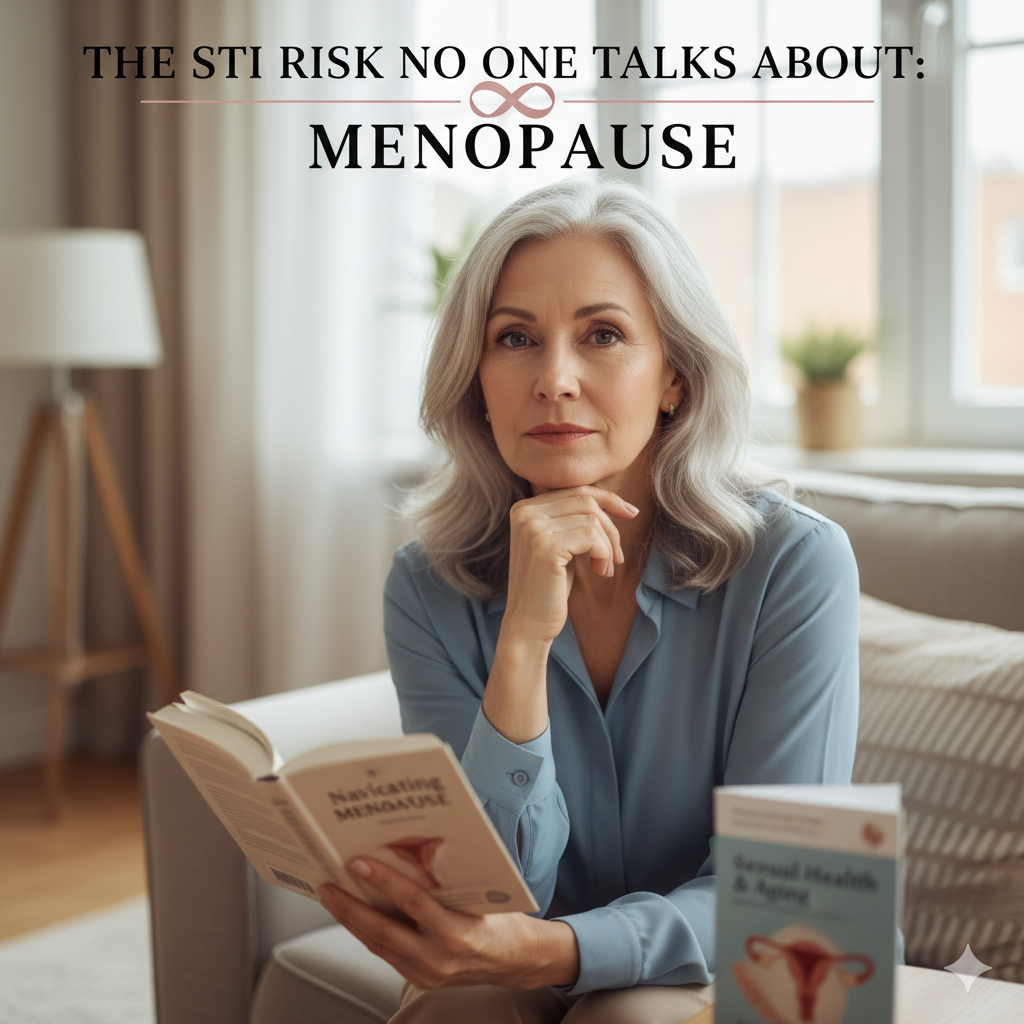
Now more than ever, we are seeing an increase in STI rates in the perimenopausal & menopausal ages. STI rates are significantly increasing among adults over 40, including perimenopausal and menopausal women, a demographic often mistakenly considered to be at low risk.



The narrative around menopause often revolves around hot flashes, mood swings, and the end of fertility. However, a crucial and often overlooked aspect of this life stage is the continued and, in fact, rising risk of sexually transmitted infections (STIs). Recent data reveals a startling trend: STI rates are significantly increasing among adults over 40, including perimenopausal and menopausal women, a demographic often mistakenly considered to be at low risk.
Recent statistics from North America paint a concerning picture. In the United States, diagnoses for STIs like chlamydia, gonorrhea, and syphilis have seen a marked increase in the 45-54 and 55-64 age groups. Similarly, Canadian data shows that the 40+ age group accounts for a substantial number of new STI cases. (1) This uptick is not a statistical anomaly but a reflection of a complex interplay of biological, social, and healthcare-related factors that are placing this generation of women in a vulnerable position.
(1) https://www.cidrap.umn.edu/sexually-transmitted-infections/std-cases-rose-5-2020-2023-biggest-jumps-among-older-adults-data#:~:text=A%20new%20Fair%20Health%20study,and%2046.5%25%20among%20females). & https://www.canada.ca/en/public-health/services/publications/diseases-conditions/report-sexually-transmitted-infection-surveillance-canada-2019.html#s4-2
The hormonal shifts that characterize perimenopause and menopause directly impact a woman's susceptibility to STIs. The decline in estrogen leads to the thinning of the vaginal walls, a condition known as vulvovaginal atrophy. This makes the tissue more delicate and prone to microscopic tears during sexual activity, creating an easier entry point for bacteria and viruses.Furthermore, the vaginal pH, which is naturally acidic in younger women and provides a protective barrier against infections, becomes more alkaline during and after menopause. This change in the vaginal microbiome can disrupt the natural balance of flora, making it a more hospitable environment for the pathogens that cause STIs.
The narrative around menopause often revolves around hot flashes, mood swings, and the end of fertility. However, a crucial and often overlooked aspect of this life stage is the continued and, in fact, rising risk of sexually transmitted infections (STIs). Recent data reveals a startling trend: STI rates are significantly increasing among adults over 40, including perimenopausal and menopausal women, a demographic often mistakenly considered to be at low risk.
Recent statistics from North America paint a concerning picture. In the United States, diagnoses for STIs like chlamydia, gonorrhea, and syphilis have seen a marked increase in the 45-54 and 55-64 age groups. Similarly, Canadian data shows that the 40+ age group accounts for a substantial number of new STI cases. (1) This uptick is not a statistical anomaly but a reflection of a complex interplay of biological, social, and healthcare-related factors that are placing this generation of women in a vulnerable position.
(1) https://www.cidrap.umn.edu/sexually-transmitted-infections/std-cases-rose-5-2020-2023-biggest-jumps-among-older-adults-data#:~:text=A%20new%20Fair%20Health%20study,and%2046.5%25%20among%20females). & https://www.canada.ca/en/public-health/services/publications/diseases-conditions/report-sexually-transmitted-infection-surveillance-canada-2019.html#s4-2
The hormonal shifts that characterize perimenopause and menopause directly impact a woman's susceptibility to STIs. The decline in estrogen leads to the thinning of the vaginal walls, a condition known as vulvovaginal atrophy. This makes the tissue more delicate and prone to microscopic tears during sexual activity, creating an easier entry point for bacteria and viruses.Furthermore, the vaginal pH, which is naturally acidic in younger women and provides a protective barrier against infections, becomes more alkaline during and after menopause. This change in the vaginal microbiome can disrupt the natural balance of flora, making it a more hospitable environment for the pathogens that cause STIs.

Sexual health and performance specialist focusing on the intersection of physiological vitality and lived experience. Tracy Daly provides a knowledgeable, shame-free space for the LGBTQIA+ community and those in CNM/ENM relationship structures, advocating for sexual agency through behavior change and radical inclusivity.