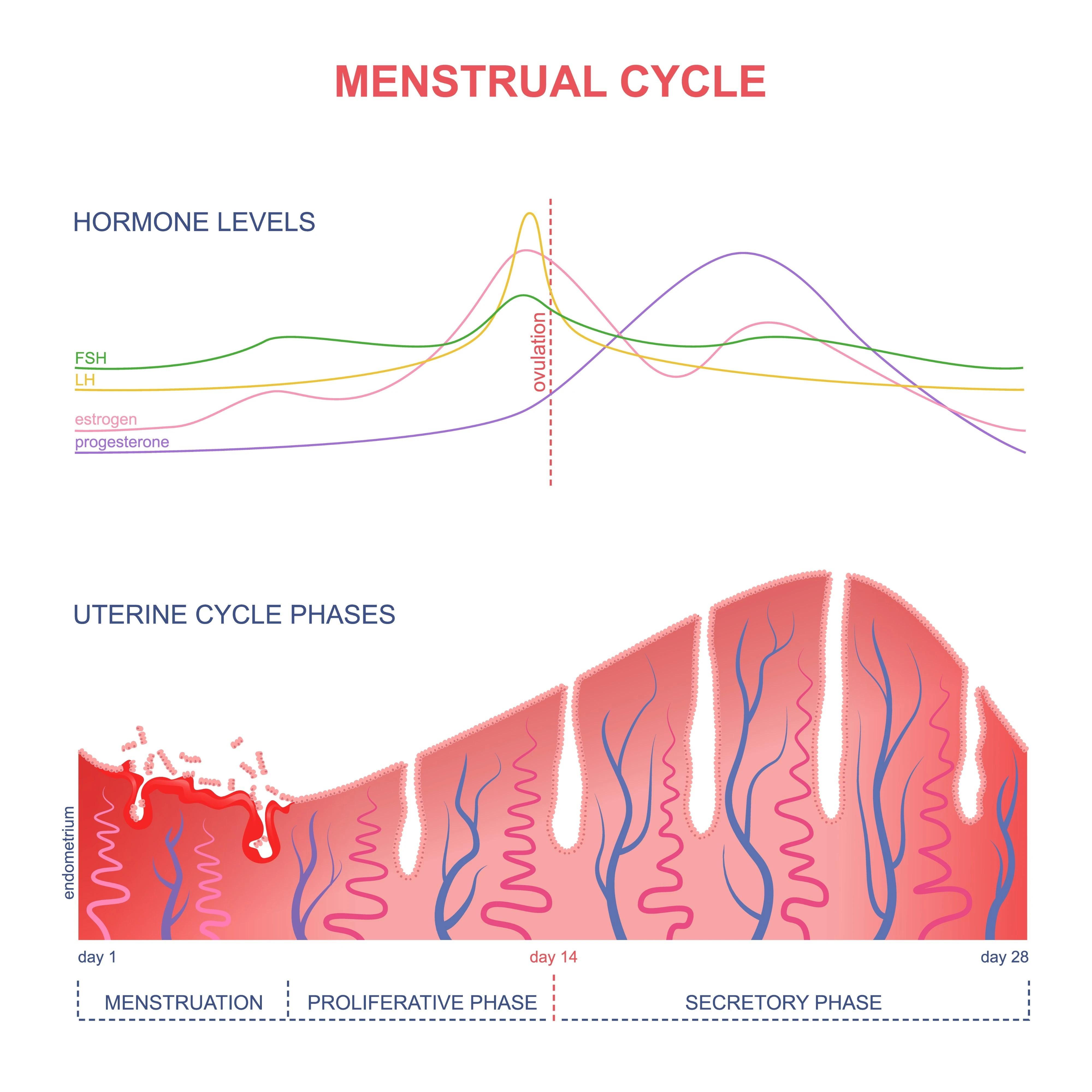
Predicting ovulation involves tracking a combination of primary physiological signs (biomarkers) and secondary symptoms. By logging these, you can identify your "fertile window"—the few days each month when conception is possible. [1]
Here are the essential things to log:
1. Primary Fertility Signs
These are the most reliable indicators of approaching or occurring ovulation.
- Period Dates: Log the start and end of your menstrual period. This helps establish your average cycle length and the "Day 1" of your cycle.
- Cervical Mucus (CM): This is one of the most accurate predictors of approaching ovulation. Note changes in consistency: [2]
- Dry/Sticky: Low fertility.
- Creamy: Transitioning to fertile.
- Egg White (EWCM): Clear, stretchy, and slippery. This is "peak" fertile mucus that helps sperm survive and travel. [3]
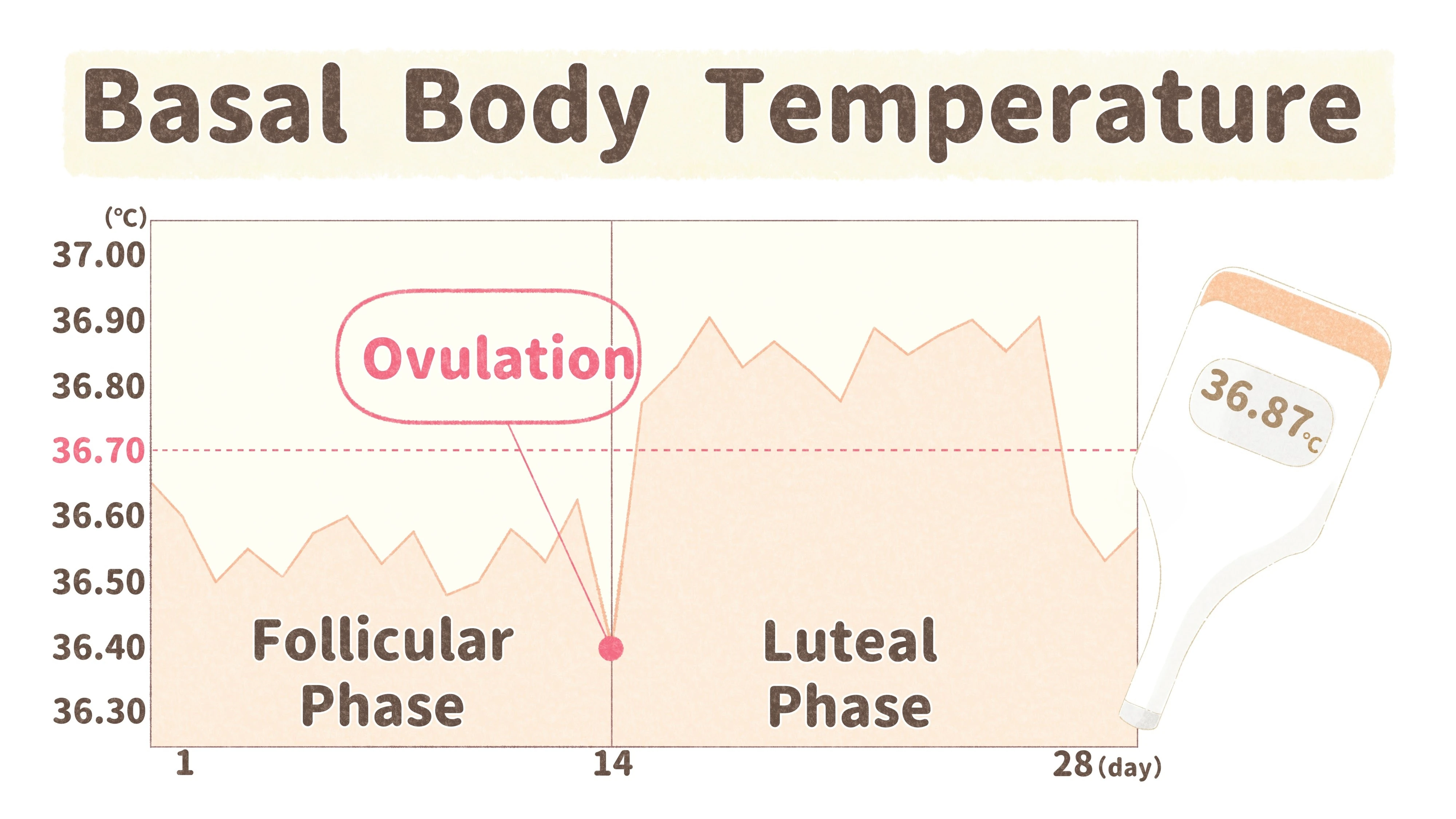
- Basal Body Temperature (BBT): Your temperature at rest, taken immediately upon waking.
- What to look for: A slight rise (typically $0.5^\circ F$ to $1.0^\circ F$) that stays elevated. BBT confirms ovulation after it has happened.
- Luteinizing Hormone (LH) Levels: If using Ovulation Predictor Kits (OPKs), log your "peaks." A surge in LH typically happens 24–36 hours before the egg is released. [5]
2. Secondary Physical Signs
While not every person experiences these, they can provide helpful context.
- Cervical Position: During your fertile window, the cervix often becomes SHOW: Soft, High, Open, and Wet.
- Mittelschmerz: One-sided pelvic pain or "twinges" that some feel during ovulation.
- Breast Tenderness: Often caused by the rise in progesterone after ovulation.
- Libido Changes: Many people notice an increase in sex drive during their most fertile days.
3. Lifestyle & Intercourse
To see the full picture, you should also track:
- Intercourse/Insemination: Mark the days you are active to ensure you are hitting the fertile window.
- Disturbing Factors: Log things that might mess with your BBT readings, such as:
- Illness or fever.
- Poor sleep or waking up at different times.
- Alcohol consumption the night before.
- High stress.
4: Steps for Tracking Fertility
4.1 Tracking cervical mucus (CM)
Tracking cervical mucus (CM) is one of the most effective ways to predict your fertile window because it changes in response to the estrogen surge that happens before you ovulate.
Here is a step-by-step guide on how to do it effectively.
4.1.1 How to Collect a Sample
You don't need to check first thing in the morning (unlike temperature), but you should check at least once a day. Many people find it easiest to check every time they go to the bathroom.
- The Wipe Method: Before you pee, wipe from front to back with clean, white toilet paper. Look at the paper to see if there is any glistening or visible mucus.
- The Internal Method: Wash and dry your hands thoroughly. Insert one or two fingers into your vagina and reach toward your cervix. Sweep a small amount of mucus and pull it out to inspect.
- The Underwear Method: Sometimes you can simply observe the discharge left on your underwear, though this is the least accurate as the moisture can evaporate.2. How to Test the ConsistencyOnce you have a sample, use your thumb and index finger to "test" it:Press your fingers together with the mucus between them.Slowly pull them apart.Note the stretch: Does it break immediately? Does it stretch like a rubber band? Is it slippery?
4.1.2 How to test the consistency
- Once you have a sample, use your thumb and index finger to "test" it:
- Press your fingers together with the mucus between them.
- Slowly pull them apart.
- Note the stretch: Does it break immediately? Does it stretch like a rubber band? Is it slippery?
4.1.3 Interpreting Your Findings
Your mucus will typically follow this pattern throughout your cycle:
Phase | Description | Fertility Level |
Post-Period | Dry, damp, or no visible mucus. | Low |
Early Development | Sticky, tacky, or like paste. Usually white or cloudy. | Low/Increasing |
Peak (Ovulation) | Egg White (EWCM): Clear, slippery, and stretches 1–3 inches without breaking. | Peak Fertility |
Post-Ovulation | Suddenly becomes dry or sticky again. | Low |
4.1.4 Tips for Accuracy
- Avoid "Arousal Fluid": It’s easy to mistake arousal fluid for fertile mucus. Try to check your CM during times when you aren't sexually aroused.
- Semen vs. CM: Semen can look like fertile mucus, but it usually breaks more easily when stretched and is more opaque/milky. Fertile CM is usually clearer and significantly more "springy."
- Stay Hydrated: Your body cannot produce adequate cervical mucus if you are dehydrated. Drinking plenty of water can make these signs much easier to read.
- The "Sensation" Test: Even if you don't see anything on the paper, pay attention to the sensation at the opening of your vagina throughout the day. A "lubricative" or "wet" feeling is a strong sign of fertility.
Avoid Common Mistakes
- Don't check after sex: Wait at least 12–24 hours after intercourse to check your CM, as semen and arousal fluid will skew the results.
- Don't "douche": This washes away the very signs you are trying to track and can disrupt your vaginal pH.
Sources
- Wilcox, A. J., Dunson, D., & Baird, D. D. (2000). The timing of the "fertile window" in the menstrual cycle: day specific estimates from a prospective study. BMJ, 321(7271), 1259-1262.
- Ecochard, R., et al. (2015). Self-identification of the clinical fertile window and the ovulation period. Fertility and Sterility, 103(5), 1319-1325.
- World Health Organization (WHO). Family Planning: A Global Handbook for Providers.
- Mayo Clinic. Basal body temperature for natural family planning; Su, H. W., et al. (2017). Detection of ovulation, a review of currently available methods. Bioengineering & Translational Medicine, 2(3), 238–246.
- American Society for Reproductive Medicine (ASRM). Ovulation Detection Guidelines.
- Planned Parenthood. What are the signs of ovulation?